
Desalination
Growing water demand, declining source quality and increasingly variable marine conditions are placing desalination plants under pressure, driving higher chemical use, membrane fouling and rising operating costs.
By integrating ozone, SHP and UV disinfection with advanced hybrid mechanical ceramic filtration and gas-to-water demineralisation, we optimise intake pretreatment, protect RO assets and improve permeate quality. Through a modular Design / Build / Operate / Maintain (DBOM) delivery model, we implement scalable solutions across both intake and product water streams, enhancing performance without the need for major new infrastructure.

Increased Plant Throughput — within existing infrastructures
Reduced Chemical Dependence & Membrane Fouling
Improved Permeate Quality & Process Stability
Lower OPEX since day one
The Real Challenges Facing Desalination
01
Algal Blooms & Biofouling
Seasonal algal blooms and biofilm formation can rapidly foul membranes and intake systems, reducing efficiency, increasing chemical use, and driving unplanned downtime.
02
Suspended Solids & Silt Loading
Fluctuating levels of suspended particulates and fine silts place significant strain on pretreatment systems, accelerating membrane wear and increasing maintenance frequency.
03
Biological Entrainment
Marine organisms drawn into intake systems create blockages, biofouling, and ecological concerns, particularly in sensitive coastal regions.
04
Brine Discharge Impacts
Concentrated brine is often discharged with limited treatment, which in some locations has contributed to ecosystem disruption and the propagation of algal blooms due to increased salinity and altered local water chemistry.
Why Intake Stabilisation Matters
The performance of any desalination plant is fundamentally limited by the quality and stability of its intake water. Fluctuations caused by algal blooms, suspended solids, biological activity and seasonal marine changes place significant strain on pretreatment systems and RO membranes.
When intake conditions are unstable, operators are forced to increase chemical dosing, backwashing and cleaning cycles. This drives higher OPEX, accelerates membrane degradation and reduces overall plant efficiency.
Optimising intake pre-treatment through advanced oxidation, hybrid ceramic filtration and targeted disinfection stabilises feedwater quality before it reaches the RO stage. This reduces fouling pressure, improves permeate consistency and enhances overall plant reliability, delivered rapidly and without major civil expansion.
Market Size:
The global desalination market represents a substantial and growing opportunity. As of 2025, industry estimates indicate there are between 21,000 and 22,000 desalination plants operating worldwide (variations depend on definitions and reporting methodologies).
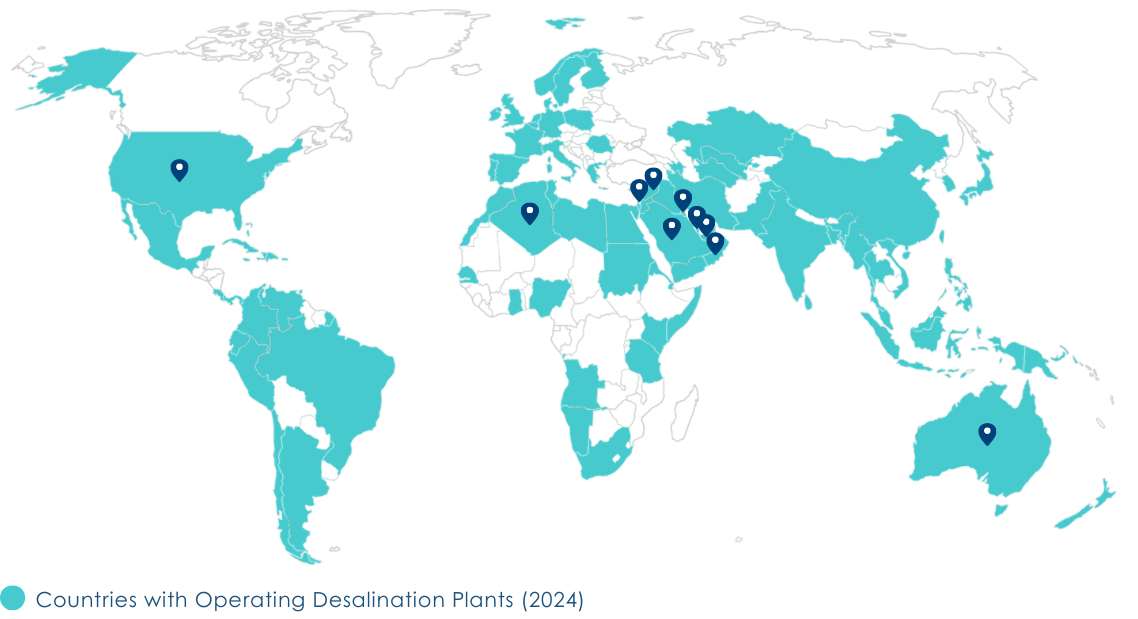
Collectively, these facilities produce approximately 95–110 million cubic metres of desalinated water per day, supplying more than 300 million people across over 170 countries highlighting both the scale of existing infrastructure and the ongoing demand for improved performance, efficiency and environmental outcomes.
The Benefits of a More Stable Pretreatment Stage
Lower suspended solids and bio-contaminant loading entering the RO system improves membrane performance, extends asset life and reduces the need for aggressive chemical cleaning.
Improved upstream disinfection and oxidation reduce biofilm formation and increase resilience to algal bloom events. This supports stable permeate production, reduces energy demand associated with fouling and lowers chemical consumption across the plant.
Practical Limits:
Pretreatment systems must manage variable marine conditions → extreme bloom events can overwhelm conventional filtration and chemical dosing systems.
RO membranes remain sensitive to biofouling → once established, biofilms increase differential pressure and energy demand.
Brine discharge constraints remain → environmental compliance must be maintained while optimising system efficiency.
Optimised intake stabilisation and advanced hybrid treatment address key fouling and variability limits, but must be integrated across intake, RO and discharge management to deliver full operational and environmental benefit.
Our Solution:
Our technical team have been at the forefront of scientific development of new hardware, chemicals and processes that deliver treatment outcomes far superior to existing market processes.
Over the past few years, advanced technology has been proven in other water treatment applications, and we now intend to implement a combination of these market-leading technologies in a bespoke process for the treatment of the three water flows in Saltwater Desalination Plants.
We deliver a complete, modular desalination solution that generates measurable savings and performance improvements from day one while protecting critical water infrastructure assets.
Stable intake water quality under variable marine conditions
Reduced biofouling and lower disinfectant consumption
Extended RO membrane life without major new infrastructure
Consistent production of high-quality desalinated water
Top Benefits for Your Plant
01
Reduced Chemical Dependence
Significantly reduces or eliminates reliance on chemicals, particularly chlorine, lowering handling risks, compliance burden and ongoing chemical costs.
02
Improved Water Quality & Membrane Protection
Greater removal of suspended particles and bio-contaminants, improved permeate disinfection, and enhanced resilience to biofilms and algal blooms all contribute to extended RO membrane life and more stable plant performance.
03
Lower Operating Cost (OPEX)
Reduced fouling, lower chemical consumption and improved process efficiency translate directly into decreased maintenance requirements and overall operating expenditure.
04
Improved Environmental Sustainability
Minimising chemical discharge and improving system efficiency supports better environmental outcomes, reduced ecological impact and stronger regulatory alignment.
Standard

Conventional pretreatment systems vulnerable to algal blooms, suspended solids spikes and biological fouling
Heavy reliance on chlorine and chemical dosing, increasing OPEX, corrosion risk and environmental exposure
Reactive membrane cleaning cycles that shorten RO lifespan and drive rising energy demand
Standalone technologies implemented in isolation, creating integration gaps between intake, RO and discharge management
Limited accountability for long-term performance, with savings dependent on operator optimisation
Net Zero Water
Integrated ozone, SHP and UV oxidation combined with advanced hybrid ceramic filtration to stabilise intake conditions at the source
Reduced chemical dependence and lower biofouling pressure, protecting RO membranes and extending asset life
Optimised intake-to-permeate performance that lowers OPEX, reduces cleaning frequency and improves energy efficiency
Modular Design / Build / Operate / Maintain (DBOM) delivery ensuring seamless integration across intake and product water streams
Performance-aligned commercial model focused on measurable operational savings and long-term plant resilience